Monday, February 25, 2008

Open Access

A couple of months ago, there was a paper published in Cell describing a way to turn skin cells into stem cells. Personally, I think it´s crap - using four modified HIV strains to induce multipotency? And they demonstrated said multipotency by immunofluorescence for so-called signature proteins? Nonsense.

Here... see for yourself.

Oh, wait, you probably can´t, not unless youŕe willing to pay $30 for the privilege. While scientists churn out new information every month, most of it is behind terrifyingly high subscription walls. If youŕe at a cush research institution like this one, they pay ungodly fees for unlimited access, but if youŕe at Drake, or a civilian, just interested in an article about your illness or trying to understand the latest scientific fad, then youŕe stuck with your nose to the glass.

But, I hear you say, many magazines are subscriber only. Certainly theyŕe under no obligation to give away their product for free? Am I just trying to guilt them because itś about medicine?

There is a difference here. When Matthew Yglesias writes an article for The Atlantic, The Atlantic gives Matthew money to write the article. If he needs to go to Belgium to follow the story, they pay for it. If heś a staff writer, they provide him with a computer to write it on and coffee to think with.

Letś say I write an article. My stipend, tuition, insurance, everything, are paid for out of an training grant from the National Institutes of Health. My advisor is paid out of a research grant from the NIH. My equipment is paid for by the same grant. If I have to fly to Belgium to do an experiment, same grant. If I go to a conference, same grant. Itś all paid for by the NIH. Which is to say the U.S. Government. Which is to say, the people.

Keep in mind that when my research gets published, I write the paper. My advisor edits the paper. The peer reviewers brought in by journal are also professors on NIH grants. The editor at the journal and the formatters at the journal are the only ones not paid by NIH.

So, of the expense in producing a scientific paper, greater than 95% is paid for by the taxpayers. I´m not saying screw the journals out of that 5%, but rather the government should spring for the cost of publication and democratize the whole thing.

As wikipedia never tires of reminding me in photo credits:
Public domain This image or file is a work of a U.S. Air Force Airman or employee, taken or made during the course of the person's official duties. As a work of the U.S. federal government, the image or file is in the public domain.
Subject to disclaimers.

This is from here. While I don mean to imply that I work for the Air Force, or that the current situation is unlawful, I am arguing for the general understanding that documents paid for by the government ought to be public property.

Sunday, February 24, 2008

Barack Obama is your new PI*

In re: barackobamaisyournewbicycle.com

Barack Obama is your new PI.

Barack Obama thinks you should start writing your thesis.

Barack Obama said you work too hard.

Barack Obama proofread your grant same day.

Barack Obama went ahead and arranged your committee meeting.

Barack Obama found a protocol for your antibody.

Barack Obama put an awesome paper on your desk.

Barack Obama told everyone to stop coming in on Saturdays.

Barack Obama got 1554 for beer hour.

Barack Obama hired a tech for you.

Barack Obama sent you to a Gordon Conference.

Barack Obama is okay with you coming in at 10:30.

Barack Obama is in his office.

Barack Obama analyzed your data.

Barack Obama knows the perfect lab for your post-doc.

Barack Obama bought you new pipettes.

Barack Obama promised to watch your mice when you went on vacation.

Barack Obama laughed at the joke slide in your lab meeting.

Barack Obama agrees with your hypothesis.

Barack Obama thinks you have adequately characterized your system.

...


*: PI = principle investigator, lab head, research professor, person in whose lab you work

**: Credit ANA, I.

Saturday, February 23, 2008

Conspiracy theory

Not being in the Military Industrial Complex, I have limited knowledge...

But a former comrade of mine in international relations suggests the satellite shootdown by the U.S. recently was a response to the Chinese shootdown last year of one of their own weather satellites.

Two pieces of evidence weigh in:

The Navy's stated reason for destroying the satellite was worry about environmental damage from unspent hydrazine in the satellite's fuel tank. Hydrazine is toxic in the sense that if someone is exposed to a lot, they may die, be seriously injured, or have an increased risk of developing cancer. It is not highly lethal (like VX), nor catalytic (like CFC's) nor long-lasting in the environment (like plutonium). There was no statement about where the satellite was likely to crash, so public health exposure is either an unknown or a known unlikelihood. If one looks at this from a strictly environmental perspective, the damage due to not breaking up the satellite must be weighed against the damage due to launching the SM-3, who's solid fuel is not exactly candy and puppy dogs.

What argues against this is that I already assume the U.S. had the ability to shoot down satellites. There's no point in attempting something that everyone already thinks you can do if there's a real chance you might fail. And the op might have failed.

Thursday, February 21, 2008

Turnout

Not that I really have time to discuss this, but a lot of people have made a big deal about the high turnout in Democratic primaries (see here for instance).

Bullshit.

The really high turnout in Iowa, New Hampshire, and other early primary states conveys real interest in the election.

High turnout in Hawaii is simply because the primary there has never mattered before. Who is going to turn out to vote after someone has already sewn up the nomination?

Deconvolute that, then Iĺl get excited.

Tuesday, February 19, 2008

Playground nonsense

I was just listening to the Schmitt/York bloggingheads, and Byron York was saying the proportional allocation system was the electoral equivalent of everybody-wins-don't-keep-score-in-soccer-rah-rah-self-esteem nonsense, as compared to MANLY ROBUST and FAST winner-take-all Republican system. A quick tabulation of Delegates, based on winner takes all the delegates by state, shows Obama CRUSHING Hillary in a MANLY REPUBLICAN RAAARGH fashion, 1396 to 1325.*

Theory, meet reality.

Apparently, the close delegate totals in real life, the close number of states won, the close 'popular vote' insofar as it can be calculated, and the close national polls reflect, amazingly, that fact that Democrats are torn between two vary good choices.

GRRRRRRRRR. MAAAAANLY.

that is all


* Those are the totals if winner takes all, including Superdelegates. If one goes by pledged delegates the totals are Obama: 1093, Hillary: 1075. At this time, the real-world delegate totals are actually farther apart than in Yorkland.

** Delegate counts from Wikipedia, as always.

If you can't be helpful...


I clicked into CNN to a story about polling at Texas that showed Obama very close, but still slightly behind Clinton. There's a link to state by state polling, which I think might help organize my thoughts...

Wow is it bad.

First, I linked to it from a story that says Obama is slightly behind in Texas. The map has him ahead.

Second, it's got states that have already voted. It has Hillary winning Iowa and Obama winning New Hampshire. Hot tip CNN: They had a really, really big poll in New Hampshire, 285,811 people surveyed. Margin of error: 0.

That last NH poll that showed Obama ahead - that's history, not news.

Either clear off the meaningless polls, or replace them with election results.

That is all.

Tuesday, February 12, 2008

Hmm


I notice a large white space on CNN's delegate counter, perhaps they could use it to display the number of delegates Won and the number of delegates bought. Just saying.

http://www.cnn.com/ELECTION/2008/
screenshot cropped with The GIMP

Monday, February 11, 2008

PatientEtherised, 1 Step ahead of the CW!

CNN has it my way.
But they get some things wrong:
First, they let the Clintons spin them on Ohio and Texas. O&T together are 334 elected delegates. This is only a little more than the 252 remaining to be passed out in February, which the Clinton spin effectively concedes to Obama (not to mention Wanela and Maine, all four of which went for Obama already).

Two, CNN's interest in money is wrongsighted. A winner can always raise more money. The question is, how long can Hillary be behind in elected delegates before the money starts drying up. Or, more realistically, how long can Hillary make up for being behind in elected delegates by having more superdelegates? If Obama can actually surpass Clinton in the total delegate number, look for that to change.

Sunday, February 10, 2008

Pro Barack Math

This is how Barack is going to win the nomination:
First, forget the Superdelegates. They're going to line up behind whoever wins the most real delegates. That means that you don't need 2025 delegates to win, you need... 1627, i.e. more than half the 3253 pledged delegates.

Current standings via CNN.com:
Obama 918
Hillary 885

So, Obama needs 709, Hillary needs 742.

The feeling is that Obama is going to do pretty well in all the states until Texas and Ohio (Mar 4). I don't mean 'feeling' as in the Obama momentum lead, I mean that the cynical view, that Obama wins caucus states and states with lots of African Americans, says he should do very well. Those states, Wanela, Potomac primary, etc. are a total of 447 pledged delegates, which is more than all the primaries in March (415) even though March includes Texas and Ohio.

So Obama will definitely be ahead in pledged delegates for the next three weeks... an eternity. And with the anti-superdelegate backlash underway (see Tad Devine's NYTimes Op-ed) Obama's lead in that group will get talked up. If he gets 2/3 of the after-Super-Tuesday delegates (~300), that will make it:

Obama 1218
Hillary 1033

Barack could easily get half of the next 415 delegates (Ohio / Texas / etc.). Why do I say that? Fewer states - more Barack time. Texas is a half-caucus, Ohio is rich in A-A's etc.

Obama 1425
Hillary 1241

Now, at this point, the superdelegates can swing it for Obama, but remember I already discounted them. At this point, Barack needs 202, Hillary needs 386 of the remaining 566 delegates. It's April, and I think momentum comes back into play in a big way.


How is this different from an analysis that says whoever's ahead will win if they get half the remaining votes?

1. Obama's lead in the elected delegates will finally get noticed.
2. Obama's lead in elected delegates will widen.
3. Obama's lead in elected delegates will persist until at least the beginning of April.

After two months of consistently being behind, with the realization of another month of being behidn before people were paying attention, I think Hillary finally crumbles.

Thursday, July 05, 2007

Gordon is Bi

So, I was watching Prime Minister's Questions yesterday and the new PM, Gordon Brown was emphasizing the need for bipartisanship. Now, I may be an ignorant Yank, but everyone knows that Britain has three major parties. Perhaps one of the Lib dems should mention it at question time:

"Mr. Speaker, is the prime minister aware of the liberal democrats? Because if he isn't the electorate certainly is."

Tuesday, July 03, 2007

Recently Asked Questions

Q1: When did you take the boards?*
A1: June 1st.

Q2: What was it like?
A2: 6 hours of sheer boredom, followed by an hour of boredom on the 6 bus that was, if anything, even sheerer.

Q3: How did you do?
IF (Q'er = Jose Quintans)
A3a: You tell me. (Unless you file papers to not have your score reported, your medical school and administrators will receive your score 4 to infinity days before you, as they get it electronically and yours is sent via US mail, hence the chance of infinity. You can file to report to them nothing, or merely that you took the test, unfortunately, those papers have to be filed 2 weeks prior to the exam, which I didn't realize until 3 days before the exam.)

Q3a1: Why can't they send you your score some other way?
A3a1: See answer 9

ELSE
A3b: No idea The score haven't come back yet.

Q4: When will you get your scores?
A4: They said it usually takes 3-4 weeks.

Q5: Why does it take so long to grade a computerized multiple choice test?
A5: Because everyone takes a different test they curve how you did versus people who did the same questions 3 weeks before and after your exam.**

Q6: Why can't they compare you to test takers from the previous 6 weeks?
A6: See Answer 9

Q7: It's been more than 4 weeks, why don't you know?
A7: Since June is a peak test taking month it may take them 6-8 weeks to process your score.

Q8: But you just said that normally they have to wait for enough data before sending your score out. If more people are taking the test, shouldn't you get it back faster?
A8: See answer 9.

Q9: WTF is going on?
A9: Either the National Board of Medical Examiners, or you, are a moron. Since the NBME, with their opaque boards and their monopolistic match control my fate for the next 20 or so years, I'm going to go with you. You are the moron.

Q10: Why am I a moron?
A10: Because you asked questions. And this is medical school.


*: Step 1 of the US Medical Licensing Exam

**: I'm actually kind of grateful that they don't have the scores right away simply because then I wasn't even more tempted to rush through the final test blocks.

Monday, June 04, 2007

So what, Ubuntu

About a month ago, I got a new laptop*, which came with Windows Vista. Being one of those people that said, "Oh, I'll never use that pile of kludge," I installed Linux on it. As it happens, there is no single Linux in the same way that there is a single OS X or Windows. Instead, there is a universe of distributions each of which is a collected set of all the bits that make up a functional operating system. I could, if I had wanted to, hand selected and tuned each piece of the operating system and assembled my own 'distro' from scratch... yeah right.**

Eventually I settled on Ubuntu 7.04 x86. Why: 1) Ubuntu 7.04 was the first distro that detected my sound card and my wireless right off the bat. 2) Have to use x86 or you cant run Flash (i.e. no YouTube et al.). 3) Ubuntu is the most popular distro, so I assume it will be decently well taken care of.

Since I'm the first person in my med school class (I think) and the first person in my family to be running Linux, I've been showing off for the past month, and the response I get is "Oh, it's a computer, it works." Having been deprived of the ego satisfaction, I've gotten to feel the same way. After all, what I've got is a rather boring laptop running a collection of programs that are slightly ugly looking knockoffs of the Windows equivalents.

Don't get me wrong, I appreciate that OpenOffice.org can export PDF's at the touch of a button, but it's best feature is that it can edit Word files without screwing up the formatting. Firefox is exactly the same, GIMP is $300 cheaper than Photoshop, if a little underpowered*** I use all of these pieces of software on my Windows computer, and I appreciate them...

But there's no killer app. The closest Ubuntu comes in my experience is apt-get, a program that lets you find and easily install, yes, more free knockoffs of Windows programs.

Maybe in some fields (web servers? security? mathematics?) the programs that everyone wants are written for Linux, but I suspect that you won't see large scale migration at the consumer level until such an app exists for non-computer professional users. Even if Linux programs looked and ran so well that Windows programs looked like the cheap knockoffs, I think people feel more comfortable with something that you buy.

So if any Linux techies are reading this (unlikely) stop chasing the taillights and do your own damned thing.


*: Acer blah blah blah. Basically I wanted a combination of small, cheap, and AMD. I should note that I didn't pick a computer based on
**: Incomplete list of distros I tried: Xubuntu, SimplyMEPIS, Freespire, Fedora Core, Kubuntu, Debian. Note that all of them installed perfectly on the first try from a LiveCD without needing to be told more than what time it was, which is pretty good. Please please don't tell me why each and every one of these is better. I give my reasons above and I'm sticking to them (for the time being).
***: Yes, I've heard of Krita, but as my computer broke down crying when I tried to run Kubuntu, I don't think it's such a hot idea to try out.

Thursday, May 31, 2007

Going to take a toilet bowl cruise...

As you may know, I'm taking the USMLE Step 1 tomorrow. Briefly - it's an eight hour computerized test covering the first two years of med school. Oh, and it's $400 to register for it. Here's a nice bit of the rules:

Your entire testing session is scheduled for a fixed amount of time. The computer keeps track of your overall time and the time allocated for each block of the test. At the start of the testing session, you have a total of 45 minutes of break time. This allotment of time is used for authorized breaks between blocks and is also used to make transitions between items and blocks.


I like the bit about my break time being used for transitions. That means I get charged a nickel every time I answer a question, a dime if the computer decides to be slow. It reminds me of the Dilbert* where the Pointy Haired Boss tells the employees that they're banking too much vacation time, so therefore they will be charged vacation time while they're in the bathroom, hence my title, which is a paraphrase of Wally's reaction.


*: Can't find it, otherwise would post, also don't have time, must sleep. An hour of sleep is like an hour of studying, or something.

Wednesday, May 30, 2007

A Procedural Marriage

Q: Who would marry a surgeon?
A: Another surgeon.

Q: What would the marriage be like?
A: Surgery is a procedural specialty, so I suppose they would have a procedural marriage...

- Marital procedures would commence promptly at 7:00 a.m.
- It might take all day
- There would be a minimum of post-op follow-up
- A third person might be present to administer anesthetics

There would be some problems, of course...

- Each partner would only specialize in a few procedures
- It would be impossible to "go big or go home"* because most procedures would already be home


* The surgeon's motto.
** You might wonder why I did not include my usual throat clearing explanation of why I was thinking about this. Well, I realized such things are rather dull and also there could be professional conflicts.

Saturday, May 26, 2007

No, no, I live in...

I have a friend that lives in the west loop. Well, not actually the west loop. He lives west of the west loop, in what one might call the United Center Zone. However, one can't say that one lives in the United Center Zone because to those in the know, it is the equivalent of saying, "I live in a free fire zone."

This is the problem with the neighborhood system in Chicago. The only semi-official demarcation dates back to 1920, with the obvious problems that come from never getting updated. Thus, developers rename areas of gentrification to make them sound like the areas they want them to be, and not like the areas that they are.

I have decided to do the same thing for Hyde Park,* so, with no further throat clearing:

GENTRIFICATION NAMES FOR HYDE PARK:

Academic Village - obvious
Rockefeller Park - after the university's first benefactor
Forefront Beach - after the hospital's ridiculable slogan
Exposition Park- after the 1893 Columbian exhibition
Suchi and Nuchi - Southern and Northern University of Chicago in the fashion of Tribeca
Olympia - in hopes of netting the 2016 games


We'd just have to do something about the food, the groceries, the public transit, the entertainment and we'd do just fine.

GENTRIFICATION NAME FOR THE UofC: Northwestern.


*: Note that, according to the old system, I live in Woodlawn, which is considered even less desirable, but would be contained within my rubric(s).
**: Rejected names: Columbia Park (columbia is always a 'not-nice' part of town), Harpersville (lame), University anything (see columbia) Ferris Pont (weird), Midway anything (association with previously sketchy airport, though I now note that Midway is quite clean and nice looking, also convenient for moi).

Sunday, May 20, 2007

Paris Hilton's Nipples

Fiddle: What do you think is the greatest crisis facing the survival of humanity today?
long silence
I: Well, it's not terrorism. On a personal scale, global terrorism is like waking up in the morning and realizing you can't have a bagel because you're out of cream cheese.
Fiddle: I've thought of terrorism as being like Paris Hilton.
I: And Osama bin Laden is Paris Hilton's nipples - popping in and out of view and always garnering far more publicity than they deserve.


All conversations approximate.

Thursday, May 17, 2007

Brief Defence of the FDA

I was at the doctor's office today, and for no apparent reason they have The Wall Street Journal. The editorial page is sort of like watching Prime Minister's Questions - a bunch of people who appear to speak the same language look at the an issue in this country and come at it from a completely perverse direction.

Witness Arcoxia! (etorcicoxib)! that ASTOUNDING wonder drug from Merck. The WSJ Op-Ed guys are in a snit because the FDA won't allow the drug to be marketed. Brief summary:

The FDA explained that it didn't see the need for another drug like this. Robert Meyer, director of the FDA's Office of Drug Evaluation II, told reporters that, "simply having another drug on the market" wasn't "sufficient reason to approve the product unless there was a unique role defined." The FDA is supposed to judge whether a drug is safe and efficacious and that's all.

OK. The authors then rip apart the FDA based on this quote. I say the quote is irrelevant.* The question is, is the drug safe and effective for its stated purpose? Answer: Define "Safe and Effective." Some percentage of people taking warfarin will suffer a fatal bleed into their brain. On the other hand warfarin may prevent them from developing fatal clots. There's a balance depending on the purpose. One is more willing to tolerate side effects from potentially lifesaving treatments from those that merely make life more comfortable.**

So, what does etorcicoxib do? Well, it merely makes life more comfortable (who didn't see that coming?). Etorcicoxib is, for civilian purposes, a pain killer. More specifically, as the 'coxib suffix implies, a COX-2 inhibitor. You may remember the COX-2 inhibitors from such debacles as VIOXX!!!

"Wait," Cara said, "didn't Merck also make Vioxx and get sued for a bunch of money."
"Indeed," said I.
"What a bunch of morons," she noted, then dozed off.

To give you the 60 second caricature, when you pop an Aspirin, or Tylenol, or ibuprofen, or Aleve, the drug inhibits two enzymes, COX-1 and COX-2 which are involved in synthesizing a lot of different molecules called prostaglandins that have different effects in different parts of the body. This broad distribution explains the broad effects of the so-called Non-Steroidal Anti Inflammatory Drugs or NSAIDS - a baby Aspirin thins the blood preventing heart attacks and strokes. Tylenol reduces fevers and relieves pain. Step back a moment andc onsider how odd it is that those effects are linked.

Unfortunately, NSAIDS are also a leading cause of gastric ulcers. This effect is presumably because they block COX-1 in the gut, which results in less secretion of protective mucus (mmmm, protective mucus). Also, the anti-coagulating effect is also due to COX-1, perhaps making the ulcers more difficult to heal. Thus were born, THE COX-2 INHIBITORS!!!. Unfortunately, COX-2 inhibitors kill. All of them. And the degree of killing is related to the degree of COX-2 inhibition. It's late, and I'm studying for boards, so I'm just going to have to take what my pharm professors said and whack you over the head with it. I'm sorry. PubMed will work for you as well as me, and is non-essential to my continuing points. Also, the COX-2 inhibitors don't really prevent ulcers, if you look beyond 6 months of use.

Even before the whole Vioxx thing, I was a big hater of the COX-2 inhibitors, because the things were like, three bucks a pill, and I said, "heck, for three bucks a pill, you could take a truckload of Tums." New, older and wiser, I say, "heck for three bucks a pill, you could buy a cratefull of Prilosec OTC" (unsurprisingly this works).

There I go, tarring etorcicoxib with that rofecoxib brush. Why don't we just see how it stands up on its own? As the WSJ says, there was a trial of over 37,000 people that showed that etorcicoxib was safe. I think they're referring to this trial (PubMed ID 17113426 if that doesn't work), which shows that etorcicoxib is about as safe as the NSAID diclofenac, and had fewer ulcers. Diclofenac? Yes, it's a real drug. I'd never heard of it either 'til I came to med school. In my limited exposure, I have yet to meet anyone taking it. Why the comparison with diclofenac, then? It's a stacked deck.*** As the Wikipedia article linked above indicates, diclofenac has 10:1 inhibition of COX-2 versus COX-1, i.e. it is, essentially, a COX-2 inhibitor (note that even the classic COX-2 inhibitors like rofecoxib, celecoxib, and etorcioxib have some COX-1 inhibitory effect). 'Classic NSAID' indeed.

How does etorcicoxib stack up against stuff that people actually take? Well, there's no significant difference there either. Wait, let's actually read a bit of the abstract:

The RRs for thrombotic events were 1.11 (95%CI: 0.32, 3.81) for etoricoxib (N = 2818) versus placebo (N = 1767);

Let me try and translate this: People taking etorcicoxib were somewhere between one third as likely and three times as likely to get a clot as people taking sugar pills. In other news, I weigh somewhere between an Oxford English dictionary and a Honda Accord. My intelligence is somewhere between a ground squirrel and Da Vinci. George Bush's approval ratings are somewhere between 7 and 70%.

Here's the real "money quote."

1.70 (95%CI: 0.91, 3.18) for etoricoxib (N = 1960) versus naproxen (N = 1497).

Translation number 1: The risk of developing a clot was somewhere between a little less than 1 and 3 times as likely in people taking etorcicoxib versus Aleve. Translation number 2: If the study had gone on 3 months more, we would have succinctly demonstrated that our drug kills people.

So, if I'm the FDA, I bounce the drug, not because there's not a marketing niche, but because it's not safe and effective for purpose. On the other hand, I suppose the study has demonstrated a "unique role" for the drug - expensive AND deadly, woo-hoo.

It's past my bedtime, so I'm going to take a final parting broadside at the WSJ, specifically this anecdote:

One patient, Kathleen Slocum, said that her life without Vioxx or other COX-2 inhibitors was "misery." She also pointed out that while over-the-counter analgesics work well for pain relief, the main problem she has had with her severe arthritis is joint swelling and stiffness; OTC analgesics haven't helped her with these problems. Ms. Slocum knows more about her specific needs than the FDA does. Isn't it possible that at least some segments of the population would find that Arcoxia addresses their needs? And remember that the people choosing are self-interested patients and their highly educated and trained physicians.

I should note that 'over the counter analgesics,' with the exception of Tylenol, will take out COX-2 as effectively as any 'coxib, so from a pathophysiologic standpoint, her argument is meaningless. I also note that 'joint swelling and stiffness' are rather vague terms that would be quite susceptible to placebo effect. Perhaps if naproxen were prescription only and 5$ a pill it would be more effective for her. Finally, there's the dodge about knowledgeable patients and highly educated physicians. I would argue that patients don't know what they need, hence they go to doctors and request drugs they saw advertised on TV.**** And I would argue that physicians, my future self included, are vulnerable to the claims of leggy drug detailers, and busy enough that we won't do the legwork that could save out patients. We will assume that if it's FDA approved, it's benefit essentially outweighs its risk in the intended use. So that's what FDA approval had better mean.

*: Key difference between science (or scientistic fields like medicine) and journalism. In journalism, it's all about getting different authorities to give quotes and bash them against each other. Medicine is supposed to be about the evidence.

**: Look, you can argue this, you can say, "But Jeff, isn't there some pain so bad that it makes life not worth living?" And I would say yes, and then I would say, "If you're so concerned about the pain, why not go for narcotics? Or something to address the underlying problem like joint replacement (for osteoarthritis) or REAL immunosupressants (e.g. steroids, methotrexate, cytoxan... for rheumatoid arthritis)?"

***: I'm as pro-pharma (probably more pro) as the next guy. If you look at a pharma trial, you will find that it has been conducted superbly. However, a trial is only as good as the question is asks. Too often, the comparison is against older drugs with known side effects, or they will test higher doses of the company drug versus lower doses of a competitor drug. This isn't always the case, but it's worth looking out for. It also gives me an excuse to stick to reading the abstracts.

****: This makes me think about all the adds Apple keeps putting out for iPods. It's like, everyone that was going to buy one already has one, but they need to keep advertising so people still think that what they bought is cool. I wonder if you could do a study about some drug in a placebo-ey category like anti-depressants and see if it's apparent efficacy waxes and wanes with the amount of advertising surrounding it.

Sunday, April 22, 2007

The problem with Watson-Crick base pairing

Is that W and C don't base-pair. You know what works? Goldstein-Crick base pairing.

(Why this should be funny but probably isn't to you: In addition to the A, T, G, and C of normal DNA sequences, other letters of the alphabet are used to designate possiblities, e.g. W = weak, which could be either A or T, so named because they make only 2 hydrogen bonds, as compared to the Strong G-C base pairs which are held together by 3 bonds.)

Sunday, April 01, 2007

Psychiatry

We get conflicting accounts of medicine in popular media, in undergraduate biology, and in more research oriented basic science lectures. But it's always good to get the single consensus answer. In CPP this comes from the mouths of practicing physicians specializing in the disease being discussed. Their answer has the advantage of having survived contact with reality, and being relatively accepted by a lot of other medical types you might talk to.

Psychiatry is an area where the gap between popular accounts and practice appears to be the widest. Civilians* throw around diagnoses, or sub-diagnoses or outdated diagnoses with great freedom, assigning fairly serious conditions to (say) celebrities they have never met. As described in psychiatry, life is more complicated. Diagnosis consists of large lists of criteria that patients have to fulfil, e.g. in order for you to be depressed, from this list:

Depressed mood
Energy loss
Anhedonia (lack of pleasure)
Death thoughts
Sleep changes
Worthlessness
Appetite
Mentation changes
Psychomotor

You must have depressed mood or anhedonia and five of the others for most of the day every day for two weeks to qualify those weeks as a depressive episode. This sort of formal rigor is much more appealing than saying, "Hey, this guy is sad, let's give 'im some Prozac."

One of the best parts of this section was that in lab, instead of only reading cases, we had actual patients come in to talk to the class so we could see what it was like. And that's where the nice neat system vanishes. Our bipolar patient was being treated for anxiety, our obsessive-compulsive disorder patient had depression. Our schizophrenic patients seemed to have well behaved disorders, but our recovering alcoholic physician had his ADHD misdiagnosed as anxiety, and got addicted to his Xanax. And if depression was such a difficult diagnosis to meet, antidepressants would not be among the top-selling drugs.

They do teach some things that are pretty easy for me to swallow:
Psychodynamic psychotherapy ("And how does that make you feel?") is reserved for those with lots of time and money.
Cognitive behavioral therapy is pushed, especially for certain disorders where medication is not helpful.

It seems to me that the reliance on medication is partially about efficacy and partially about cost. Consider that you can get a month's supply generic prozac or paxil (fluoxetine and paroxetine) for $4 from Wal-Mart, but that a month's supply of cognitive therapy is $400.


* I realize that this is my first use of this potentially derogatory term to describe non-medicos and another step on my long journey to becoming and asshole physician. Further I recognize that this blog began as an attempt to stymie said journey, and has instead served as a record of it.

Sunday, March 25, 2007

More Veiled Conceit*

Peruse this wedding announcement:

"Unknown to Ms. Luft, her skirt had somehow become tucked into her pantyhose. When the elevator door opened, she realized there was a problem. 'I only noticed when everyone in the elevator was staring at my backside,'"

Obviously, this woman is very enamored of her sweet, tight buns or she wouldn't have related this tidbit to the whole planet. Or at least she was enamored of her 16 year old buns. Let's see what Wechter has to say about it:

''I was very attracted to Sara when I first met her... She's got a very engaging personality. I thought about her all the way home.''

Sweet, tight, engaging.

Couples write their own wedding announcements, so one can only wonder why the couple chose to write it this way. Do they want us to read between the lines? Do they figure they have a better shot of getting in if they have a bit of salacious summer camp gossip?

Doing an O&P (That's occupations and parents) we find that their jobs are investment/portfolio types, as are their parents, so, they're standard fare for the NYTWCA. They live in New Jersey, he works in Greenwich, and she works in New York. How miserable. Each of them spends at least 3 hours a day in the car or in transit.

Other than the meeting story, this couple is so aggressively boring that they would normally fly under the VC radar, except for the bride's heavily aftershadowed closing line, '''It was Josh, making sure I got home safely from my flight,'' she said. 'That was when we were 16 years old, and we've pretty much stayed together since.'''


pretty much [prit-ee muhch] adv. 1. After dating for two years dating long distance, they agreed to 'see other people at college.' His banana face

doomed him to four years of sucking face at closing time at the Copabanana. (Slogan: Where ugly girls go to cop banana faces.


I just realized that this icon is probably for an establishment where ugly girls go to cop other sorts of bananas, but I think the point is made). His bitterness increased when in a desperate, drunk dialing rage he called her voice mail and got: "Hi, this is Sar, please leave a message after the tone. If you're calling because you saw my name above the urinal at Tongue and Groove (click for awesome music), please send a head and a body shot to luftballoon@emory.edu. I'm totally stoked to hear from you, bye-ee." His sobbing description of a strange sore on his penis drew out her compassion, and she agreed to get back together... after the penicillin kicked in.

2. He demanded that they stay together through college, but then one day that girl in his Management 318 class showed up with her skirt tucked in her pantyhose. She flew in unexpectedly to surprise him, and found the pantyhose draped over his doornob. "Wechter?" He said over the phone, "I hardly knew 'er." Six years, 14 breakups, and numerous heartfelt conversations later, they give up on dating other people and show the whole world their orthodontic work on the NYTWCA.

3. In order to stay together in college, they lived in Rocky Mount, VA (exactly halfway between University City and Atlanta) and commuted 6 hours in either direction, which makes their current 3 hour commute look like crossing the street. Once she got really sleepy and stayed in a rest stop in North Carolina, so they spent the night apart.

Which do you think is most likely?


*Veiled Conceit is the original idea of 'Zach' at Veiled Conceit
With special help from Cara.

Monday, March 12, 2007

A Little Veiled Conceit*

Veiled Conceit: A glimpse into that haven of superficial, pretentious, pseudo-aristocratic vanity: The NY Times' Wedding & Celebration Announcements

Before we begin this week's edition of Veiled Conceit, I'd like to give small public service announcement:

Do not, under any circumstances let your picture look like this:


Seriously. She's either ridiculously smug, or giving every pretentious male in the U.S. a 'come-hither' look. Maybe both. She was in the Peace Corps. I would say that ex-Peace Corps folk are usually highly pretentious about it, but the one's I know are actually quite nice. damn. She used to fight child trafficking in Nepal, but then she started working for Planned Parenthood, and you know what inappropriate trafficking joke goes here. As for the groom, Bob, he's totally oblivious, although his gaze is oddly mesmerizing.

Update: I just noticed the bride is 35. I swear officer. I know she looks 17, but at least she's old enough to know to lie, right?


Let's go to this week's vows couple, fine art photographer Alex Heilner and his bride to be Amy Scott. Let's look at some of his work, eh? I immediately went for the collection called 'microbes.' The best I can say is that the landscape photos are much better.


a colony of Penicillin Resistant E. statebuilding

It seems that Mr. H is known for his alphabetizing ability, and his annual scavenger hunt. He's also known for his list of desired girlfriend qualities, "An abridged version" said the Sunday Stylez Crew, "would include: brainy, creative, humble, funny, confident and energetic enough to go out every night. And one more thing: 'Hot. That was important.'" Translation: Hot. Re-translation: Hot, and willing to always put Queen II in front of Queen on Fire: Live at the Bowl because I comes before O, or U.

Let's look at the man himself...

Objects in mirror are closer than they appear.

Any middle class pig can photograph himself in the bathroom mirror. But, the car mirror! Genius. Every car commercial every written satirized in a single, digital moment! Couldn't we get a better head-shot, you ask? Well, no. He's a small, Beetle-like figure in wedding picture A, and an out of focus cheek in wedding picture B.


He's definitely "small enough to fit in a guitar case"

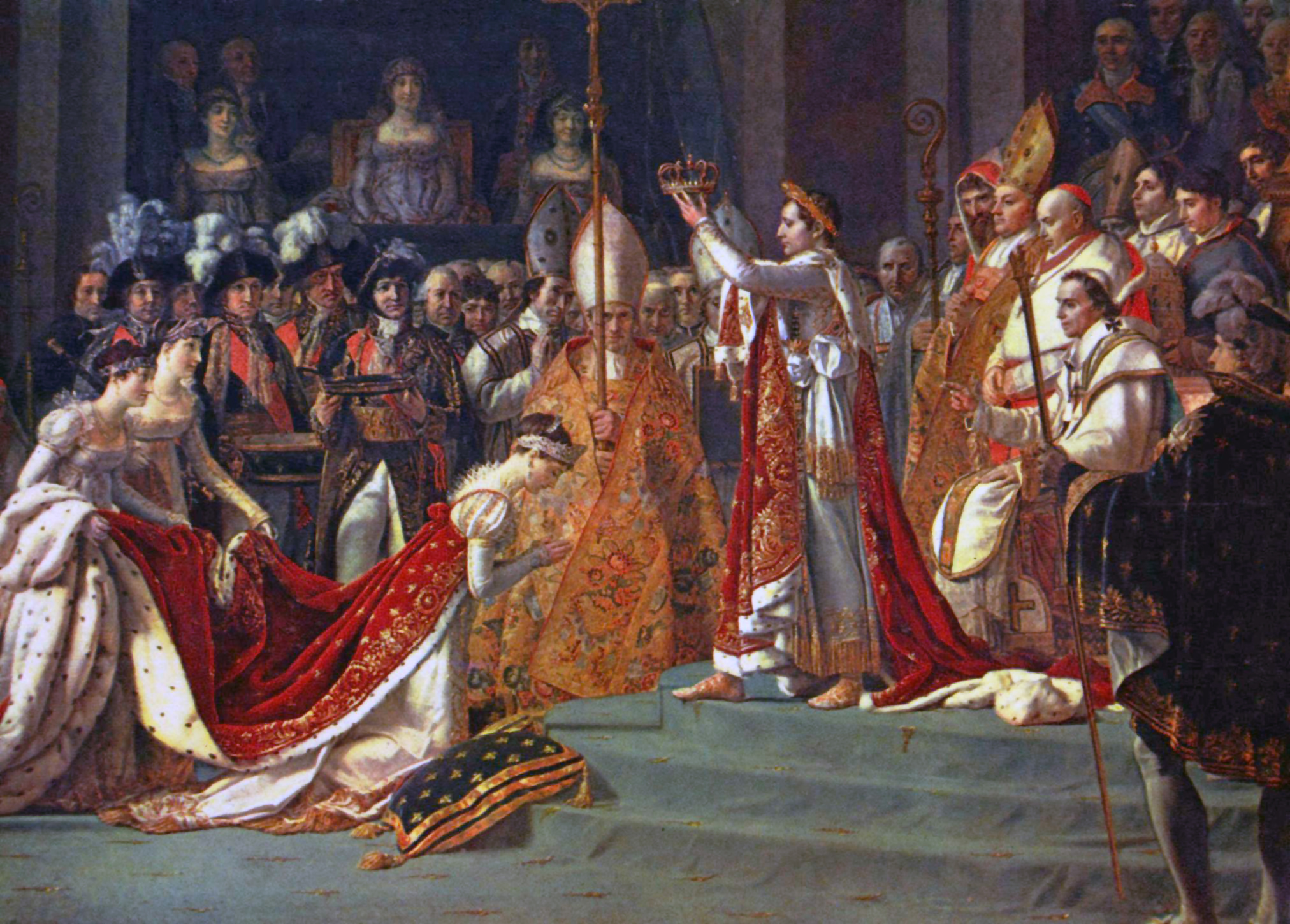
According to the article, the couple married themselves, as is legal under Colorado law. What sort of pretentious yuppie Napoleon bullshit is this?


Napoleon: Also small enough to fit in a guitar case.


Buyers Remorse

As always, the real story is in the background...

He and Alex gaze at the same thing far to the right. Is it the open bar? The air conditioner? Or the next item on Alex's scavenger hunt of love? Only time will tell, but statistics say...


Finally, I'm going to try to convince Cara to help me out with a video, which may get updated in below.
Update:


*Veiled Conceit is the original idea of 'Zach' at Veiled Conceit

Wednesday, March 07, 2007

Top residency choices this week:

1 allergy & immunology 46
2 hematology 44
3 radiology 44
4 aerospace med 43
5 dermatology 43
6 neurosurgery 43
7 neurology 42
8 emergency med 42
9 general surgery 42
10 pediatrics 42

Saturday, February 17, 2007

The 3PPS Test

How to do it: Visual examination of the proximal phalanx of the third "ring" finger of the left ("sinister") hand.

Possible findings - documentation:
1. Nil.
2. Ring - describe ring.
3. Ring callus - note.


The upshot is that my frequent failure to perform this simple task has resulted in mockery from my physical diagnosis comrades,

Tuesday, February 13, 2007

Tofu Cube... OF DEATH!!!

I had a charming case of food poisoning last quarter, which I was able to (thanks to Medical Micro) identify as heat stable staph toxin. I don't want to go into it now, but at the time, I asked my friends who had been at the same restaurant if anyone had the same symptoms, and a friend wrote back that she can't get food poisoning since she doesn't eat any meat.

Contra that, today I noticed a report in the CDC's Morbidity and Mortality Weekly Reports, and they talk about this Chinese couple that got botulism from their fermented tofu.

Anyway, I have extracted below the recipe for TOFU OF DOOM.

The tofu was a commercially packaged product purchased at a retail market. In the home, the tofu was boiled, towel dried, and cut into cubes. The cubes were placed in a bowl, covered with plastic wrap, and stored at room temperature for 10--15 days. The tofu was then transferred to glass jars with chili powder, salt, white cooking wine, vegetable oil, and chicken bouillon to marinate at room temperature for 2--3 more days. Finally, the fermented tofu was stored and eaten at room temperature.


*
Note that I cite MMWR below.

Wednesday, February 07, 2007

After I dressed this morning...


C: You look like you're going clubbing.
I: Not so much, but I am going to go study clubbing.

The image to the side is of clubbing - bony expansion of the tips of the fingers caused by long-term lack of oxygen, e.g. that caused by smoking or other lung damage.

Sunday, January 21, 2007

AIDS drugs cause AIDS I

Yesterday, I was puttering through the hospital when I came across a J, pathologist friend of mine. Whenever I see a pathologist, I always ask to see whatever slide they're working on, which usually results in an interesting story.

J told me about a case from his residency in 1994. A 20 year old man presented to the morgue with multiple Kaposi's Sarcomas in his GI tract. KS is a cancer of an unknown, probably blood vessel cell which is caused by the Kaposi's Sarcoma Herpes Virus (KSHV, HHV8). Prior to 1981, the stereotypical patient with KS was an 85 year old Italian male.

In '94 the stereotypical patient was this patient, a young gay man. Since the cancer was in his digestive tract instead of the skin, he didn't have a chance to get treatment.

Not that there was much treatment.

J kind of breaks off and says, "We don't really see cases like that anymore, not since '96."

Boards question:
A 37 year old male heroin user has noticed multiple 0.5- to 1.2-cm plaque-like, reddish-purple, skin lesions on his face, trunk, and extremeties. Some of the larger lesions appear to be nodular. These lesions have appeared over the past 6 months and have slowly enlarged. The most effective treatment for his condition is:

A. Vincristine, irinotecan, and cisplatin.
B. Valcyclovir, gancyclovir, and foscarnet.
C. Indapamide, metoprolol, and prazosin
D. Zidovudine, lamivudine, and efavirenz.
E. Ticarcillin, clavulanate, and gentimicin.


Tick
Tick
Tick


Correct answer: D. The common thread in all of this is the Human Immunodeficiency Virus, and the cocktail indicated is an ideal treatment. The release of protease inhibitors in 1996 meant that the number of patients with full blown AIDS and AIDS defining illnesses cratered, hence the dearth of KS biopsies.

This brought to mind a story on badscience.net about South Africa's stand against providing AIDS drugs to AIDS patients. For instance at an international HIV/AIDS conference, the South African booth featured that infamous reverse transcriptase inhibitor, the African Potato. Anyway, part of the South African government's argument is that, as the title of my piece indicates, AIDS drugs cause AIDS.

How can we reconcile J's observations with this claim?

Prior to 1987, there were no AIDS drugs in general circulation. One can only conclude that gay men, injection drug users, and hemophilliacs were secretly stealing AZT and snorting it starting in the mid 1970s. Of course the world's known supply was sitting on some lab shelf in Research Triangle Park. The only reasonable explanation is therefore that the Columbian cartels must have stolen the structure and synthesized a bunch of the stuff, and used it to cut the blow.

Explaining the sudden drop of KS after 1996 is relatively trivial. As it turns out, AZT causes AIDS, but the 3TC and Efavirenz are actually antidotes, so as long as people take them as a cocktail, nothing too horrible happens.

Essential resources:
AIDS reappraisal - Wikipedia (it's almost painful how hard they worked to keep this article neutral)
A little piece of history. Check the date.
Hopefully I'll get to address other aspects of the 'reappraisal' in a later piece.

Among my many flaws:

I: I seem to be missing the gene that makes you want to go to a bar, have one drink, and say, "Hey, let's go to a different bar!

She: SRY?

Thursday, January 04, 2007

A problem possibly solved

Yesterday we started anemia, particularly the iron, B12, and folate deficiencies. It reminded me of a patient I saw last year who had a very confusing constellation of symptoms, but which I now realize were all anemia caused by a rash that had appeared on his chest 3 years earlier. The rash contained, presumably, rapidly proliferating skin cells and immune cells, which would suck of the folate and B12, both of which are involved in DNA synthesis. This was compounded by the patient's poor eating habit. Now if I could just figure out what the autoimmune condition was.

Something sort of similar is maybe in this paper.

Problem Solving Skills Dos

We're doing CPP&T this quarter, which is the part of medical school where they actually teach medicine. Each lecture takes the following format: "Here's a disease, here's how you get it, here's how you recognize it, here's how you treat it." Then we have lab twice a day, which is a series of cases where patients have the illness and we have to establish differentials and suggest labs and such.

We're also taking Physical Diagnosis, part of which is to run around the hospital, interviewing patients and doing as much of the physical we have learned, then trying to do diagnosis and present them to an attending physician.

It occurred to me today that medicine is very much like school problem solving - you are presented a patient/problem, you attempt to solve it in a stereotyped way based on practice problems of a similar appearance. You either get it right or wrong, but either way, you quickly move on to the next problem. If you do a good or bad job overall, it will definitely matter, but success on one problem, or even one type of problem is not necessary.

This is unlike other areas of work, which I can't think of right now, where either you can't move on, or all your problems are interrelated in ways that are simply impossible to entangle.

Anyway, that makes medicine comparatively comfortable, as opposed to, say, research, where you may be stuck on a problem for years, never knowing if you have the right answer.

Sunday, December 31, 2006

The Second Eval

To: Office of Medical Education
Re: Work load of fall quarter

I would like to clarify my position on the course load for this quarter. I strongly believe that the work load for this quarter is appropriate. Therefore, I would have said "Strongly Disagree," but I'm concerned someone would take that as a request to load more work into the quarter, which I feel would be inappropriate.

Wednesday, December 27, 2006

Keith Ellison and the Hot Tub


Reviewing this I worry that some people will take it the wrong way, but I worry that throwing more words at it will make it worse. So, please interpret my remarks to be inoffensive to Christians, Muslims, and Jews, and if your worldview is relatively close to mine, we will have achieved communication.

As an aside, I do, in real life, know how to pronounce 'coup.'

Overly extensive coverage at... Wikipedia, where else?

Look there's a moose

My friend Sancho began working at Garmin recently and is justifiably proud of their winter ad campaigns. Observe:

"The moose"


Sancho prefers the moose, but I find it's scare tactic ways a little troubling. More realistic of what I would use a NuVi for would be:

"The unibrow"

Monday, December 25, 2006

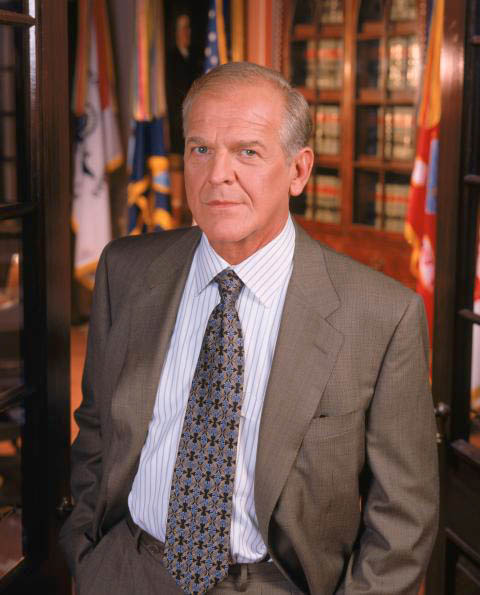
Why Rumsfeld stuck around so long


On the top, Leo Thomas McGarry, the wise chief of staff cum vice presidential candidate on the West Wing
On the bottom, Donald H. Rumsfeld, the secretary of defense cum ex secretary of defense on CNN.

Scary it took me so long to figure this out.

Matchmaker matchmaker: A little veiled conceit


Recently, my mother asked whether people actually meet on JDate. Well mom, if the December 3rd vows couple is to be believed, not only JDate, but also SawYouAtSinai.com and JRetroMatch.com are smoking. Yes, mom, I'm sure they're full of nice Jewish girls.

But what's with Jews and constantly fulfilling stereotypes (and using that classic Seinfeld construction?)?

The bride, Rebecca Benjamin (oy!) is a matchmaker from Chappaqua, home of those other famous Jews, the Clintons. Alas, she is doomed never to fall in love, until she does. Maybe it's because she's so bossy, what with her always having to get the appetizer that she wants and getting a seat next to the groom at a singles event. She's quite picky though, "surmis[ing] from his height and appearance that he was potentially the one for her." From the pictures it looks like those qualifications were, "taller than me" and "cheeks you can grab while calling someone a little punim."
Not that his judgement of hotness is that great either. When visiting a friend, he saw a picture of that friend, former Vice President Dan Quayle, and Ms. Benjamin - focussed on her! Maybe it was recent and Danny boy has lost his hotness... sigh. Oh Dan.

I'm sure her heart jumped when she found out he worked at the law firm of Goldstein (no relation), Goldstein (no relation), Rikon, and Gottlieb, but must have descended a bit when she discovered he was only an associate. This means one of two equally troubling things: Either there are a lot more Rikons running around than I thought, or the groom is working for his father at the age of 30.
Finally they danced and formed an "instant relationship." They were "inseperable" But three weeks later the little Punim went on another singles cruise.
Why did he go?

"I booked in advance, and it was non-refundable..."
It was non-refundable.
IT WAS NOT REFUNDABLE!!!
Way to make the race look bad, buddy. *
The rest of the piece continues in its typical sappy fashion with additional bits of sterotypical Jewishness, but nothing can match the enormity of this confession, so I think I'll leave you with that.

As always, I must give credit to the originator of this concept, "Zach" of Veiled Conceit.
* Among the commandments that Jews are required to follow is to not commit Hillul ha-Shem, which is shaming the name of God. Indeed, there is a commandment against bad PR. Of course there's also a commandment against shaving with a razor, but being the modern Jew that I am, I continue to see the historial reason for the former commandment while gleefully violating that latter.

Sunday, December 24, 2006

Continuity

So, linking in the pictures and the videos means that there will be some continuity errors with what was previously published, id est, I lied. But you were expecting that, right?

The new idea is to provide a mix of multimedia content that is unashamedly comprised to incomplete thoughts, why? because I don't have time to complete them.

That is all.

Video Archive

My video channel is:
http://www.youtube.com/profile?user=lostea

It's, video-ish and what I've been doing.

Sunday, October 23, 2005

Circular Reform II

The meat.
The Poobah feeds us what he thinks good curricular reform looks like. We need to get away from spoon-feeding lecture material and move toward problem based learning. We neeed to encourage life-long learning. We need to promote horizontal and vertical integration, i.e. I need to talk to more 4th years. We need to get away from the 2+2 formula of medical education where there are two years of preclinical class-work and two years of clinical apprenticeship in the hospital. We should replace it with a 2x2 formula that promotes more integration between the preclinical and clinical worlds. I wonder if he's aware that, on a stricly mathematical level, 2x2 = 2+2? Obviously, this is deeper than math. Of course, I have no idea how 2x2 might work, and Poobah gives no pointers.

Poobah also encourages our initiative to promote good teaching and our huge push for professionalism. Little does he know that our professionalism teaching actually includes (see Hubris). Finally, he says that we shouldn't be seduced by false outcomes, things like standardized exam (board) scores, student satisfaction, and residency results (the Match). After all, we're amazing students, so we should do well on the boards regardless.

He talks about the need for humanism and the goodness of having a standardized patient interview as part of the 2nd step of the boards. He talks about the possibility of changing pre-medical requirements to start out with better trained students, or other larger reforms. In response to questions, he complained about the loss of low-income students who don't understand that they'll be able to pay their way out of the enormouse debt burden that medical school entails, and speculates unproductively about how medical schools can decrease their costs.

Ahem.

1. There's no data. I complained about this on the way out, and another student said, "There is data, he just didn't show it to us. If he had, it would have taken six hours." Maybe, but without the data, the hour speech is a waste of time. As Poobah said, one of the major obstacles to curriculum reform is student opposition.

2. I have very little to say to a fourth year, thank you very much. I mean, we can talk, but when we do I don't learn things that I need to know. Unlike undergraduate, there's not stuff that you need to start right now or you'll be screwed, because all that stuff is built into the curriculum.

3. 2+2 is not on the table. Sure, the inspiration for this system (The Flexner Report) is almost 100, but that doesn't automatically make it wrong. More significantly, the dean's office told the MSTPs that this is unlikely to change. Since we do 2+4+2, a major disruption of the 2+2 system will affect us deeply. This isn't to say that they would never do anything to inconvenience us, but they gave no details on what the reform would be, other than to say 2+2 was unlikely to change, which makes me feel more confident that it will be protected.

4. The reason DMS couldn't tell us what the reforms would be is that they pitched them as being student originated and student driven, so I resent the possible implication of this meeting that reform will be centrally designed and executed.

5. Problem based learning is not a panacea. For the non-medical types, PBL is a system where, rather than sitting in lecture, students are put in small groups and assigned problems to deal with. In medicine, these normally take the form of cases. The varied parts of the case serve as teachable moments, e.g. we have a patient with poor circulation and use it as an excuse to talk about hemoglobin. At the same time, we can talk about the physiology of circulation, how to interview this patient, what parts of the history are significant, how to deal with this patient's access to care etc. etc.

This sounds great, right? Kind of. This environment isn't the best environment for everyone. Some people love lecture (I go back and forth). If you don't learn from lecture, you just don't show up. If you don't learn from small group, they still take attendance, so you get to suffer through however many hours of groupthink, then go home and try to learn it your way. Regardless, some things are just better lectured. The tie-ins can be somewhat contrived. Each small group has to be led by someone, who will either be a professor (expensive) or a TA (useless). There's also no way to standardize what a small group will cover. Do you want to be treated by someone whose group shortchanged the hemoglobin, or the history taking? What happens when they have a patient that isn't a case? There are thousands of pathogens and drugs that 2nd years have to know cold - how is that case-able? Switching to case-based learning would also require Dupont to build us a huge new expensive building to accomodate the numerous small groups, making the transition that much more expensive.

Every generation has its own educational fads. Whole language. Integrated Math. International Baccalaureate. Self Esteem (ugggh). How do we know that PBL is a real advance and not a random gyration or cul-de-sac of edu-bureaucra-somethingorother?

6. My last question is not solely rhetorical. How do assess whether a pedagogy works? It's not trivial. One way is to look at internal grades. Early in Harvard's New Pathway program, for instance, rather than teaching students the names, origins, insertions, and actions of the muscles, they just taught them that muscles have names, origins, insertions, and actions. These students were quite noticeable in their 3rd and 4th years as they were the ones that had no f'ing idea what they were doing. We don't really have internal grades, so this won't work too well.

Since medical school involves a lot of material, one simple and obvious way to test multiple pedagogies is a standardised test, like the US Medical Lisencing Exam, and see whether a pedagogy improves scores. But Poobah said that board scores don't matter because we're such stellar students that we'd do well anyway. No. Look at Baylor. They teach to the boards to an outrageous degree, and their board scores are significantly higher than say, ours, since we basically ignore said boards. Thus, pedagogy can have an impact on board scores. Second, it's ridiculous for a person that is (somewhat) involved in running the USMLE to say that it doesn't measure anything. Emphasize touchy-feely all you like, but there is a body of knowledge that doctors MUST posses. The degree to which a school imparts that information is relevant, even if it is not the whole story.


MBA programs are ranked by how much money their graduates make after 3 years. The analogous system for medical schools would see where people go for their residency. This seems more reasonable than board scores - the application process involves interviews, recommendation letters and descriptions of our performance in clinical clerkships. If I've learned nothing, continued my unprofessionality, and turned into a peronality-free robot, they'll notice. There are problems with this, obviously. It's less quantifiable than boards, unless you want to assign points based on how prestigious the specialty and location of the residency are, which would itself be arbitrary. Since residency is a matter of matching, in which students rank their preferences, you could see what percentage of students get their first choice, but what if I rank a place first because I know they're the only place that will take me? Finally, part of the reason I'll get into a specific residency is because I went to Dupont. The system is sticky - difficult to change. Still, looking at the change in our performance, relative to ourselves, provides some quick feedback.

One could argue that the true definition for success lies in the future, some 10 years hence, when they see what kind of doctors we are. This is horribly non-quantifiable. How are they going to assess our competence then if they admit it's impossible to measure competence now? Is it going to be outcomes, in that our school is better if we place more professors? That ignores the fact that most people don't want to be professors. Should we do take-home pay? How uncivilized. It does however, have the advantage of being a realistic assessment of your value to society.

Once you eliminate ways to compare programs, the relative value of programs is dependent entirely upon reputation. For instance, we have a reputation as a "Top 10 medical school," when, in fact, we're not. Not even close. But the strength of the Dupont brand is such that we seem that way. Or something. The whole 'not top 10' is based on US News's rankings (http://www.usnews.com/usnews/edu/grad/rankings/med/brief/mdrrank_brief.php) which, in the absence of better data, will be the way med schools are ranked (which should be incentive for developing alternate rankings). Let's look at the rankings and methodologies (http://www.usnews.com/usnews/edu/grad/rankings/about/06med_meth_brief.php): Reputation. Reputation. (This counts for 40% of the score, btw). NIH grants total, and per researcher. How this affects the quality of my MD-only colleagues education, I couldn't say. Note that the total is more heavily weighted than the per-researcher, thus encouraging schools to add mediocre scientists.

The next part is hillarious. Acceptance rate - what this has to do with quality, again, is unclear. Plus it encourages schools to drum up applications. Also, is this based on primary applications, or secondaries? A primary application costs $30 and all you have to do is check another box on the common app. To do a secondary, you actually want to go to the school. MCAT - yes, let's replace using board scores for a test that wonders whether you remember your cyclohexane chair conformations (http://www.cem.msu.edu/~reusch/VirtualText/sterism2.htm) from OChem. Undergraduate GPA - . Enourages schools to accept people that avoided PChem and/or classes that they thought would prove difficult - these are precisely the sort you want for your physician, no?

Faculty/student ratio is interesting. Note that's faculty members per student. We're not in undergrad anymore, dorothy. And while I would appreciate getting picked apart by 9.5 professors if I went to Harvard, I'm not sure I would notice if it was only the 4.5 that would be after me at Hopkins. Again, this encourages schools to hire more crappier professors, or relabel reserach assistants and other non-helpful people as 'teaching faculty.' Next to these metrics, board scores and %1st pick for residency seem downright brillant.


Satisfaction
The third criterion rejected by Poobah is student satisfaction. I've heard the argument before: I have no basis for comparison. I don't know whether my level of knowledge is actually good or competitive, only how it measures in the eyes of the very people I'm rating. Just because I had a good time in class doesn't mean I got anything out of it. But, as Poobah says, we're good students. We went to top schools. We take out knowledge and try to think about problems. We have a basis for comparison - it's called undergraduate. I've been taught physiology before, and I know when they're doing a bad job. We're here to learn, and we can tell the difference between when the professor is imparting useful information, imparting details about their research, and goofing off, and we rate them appropriately.

Saturday, October 22, 2005

Circular Reform I

Obviously, Dupont needs to change the way it educates its students. I'm not talking about obvious, low risk, and brilliant moves, like rehiring Dr. X. That's far too petty. Rather, DuPont needs to completely rejigger its curriculum, and in doing so leapfrog ahead of other medical schools and have:

THE CURRICULUM OF THE 21ST CENTURY

We got a speech on this matter from one of the GRAND POOBAHs of the medical establishment.^1 It occured at noon, after a morning's worth of classes. Lunch, paradoxically, was not served. One of the constants of medical school is that when they want you to do something, there's free food. Nonetheless, the entire 250-seat auditorium was filled, with numerous upperclassmen sitting on the stairs. First, the dean got up and introduced the poobah. They went through this guy's whole pedigree (Harvard, Harvard, Harvard, Harvard, Harvard, Harvard, Harvard, Harvard, Harvard, Harvard, Harvard, Harvard)^2 Note that he's ~60 years old. Is that philosophy conversation he had with Chas during the Eisenhower administration really this important? Fortunately, they also went over all the crap he's done since then.

About midway through the resume, I was struck by a thought, "How cool is it that we live in the age of empiricism, where all the resume in the world does no good if the data is against you?" And I resolved that I wouldn't believe a thing unless I got the data. I have a grad class where people will refuse to give any credence to a paper because there's a shadow in one of the gels. Should we require the same standard before we muck up a generation of Dupont grads?

1 Saying who would be too much, but this was one of the top 20 people in medical education. Think deans of medical education, AAMC apparatchiks, medical education 'experts,' psychology types etc.
2 That's preschool, grade school, high school, undergraduate, post-baccalaureate research, MD, PhD, residency, fellowship, professoriate, chairmanship, initiative directorship, and deanship. As I wasn't taking notes, my rendition may be slightly innnacurate.

Has it been this long

And nothing has really gone on? The honest answer is yes. I am of the opinion that in order to write, you must have something you want to say. This is part of the reason I got out of writing as a field - I don't think that my ideas, in and of themselves, are of much originality or value. In my case, I've got nothing to push against.

The pressure of summer is basically gone. I no longer study every night. If I did, I would be so far on top of everything it would be ridiculous.* I try to amuse myself with pathology conferences or radiology visits, but scheduling for them is inconvenient given the amount of class I have. It's becoming obvious that I can improve my day immesurably by simply skipping the first lecture of any given day.

Why is the pressure of summer basically gone? It's simple. Anatomy and histology are two large concept areas where I had no previous knowledge. Zero. We receieved bone sets our first day, and I couldn't identify squat. Histology didn't start out as pinkish bluish ovals, it started out as 'can't focus on the image 'cause I don't know how to use a microscope.' Contrast that with physiology. Our med physio class is 100 'hours,' long, whereas my junior level physiology was 75 'hours' (Or 90 or 105, depending on how you want to count the lab) and taught on the same, if not a higher technical basis. The prof at Norbert, for instance, did us the courtesy of assuming we understood metastable kinetic states, and how they related to sodium channel opening (in a purely qualitative way, but still informative). For grad courses, Cell Biology and Proteins (my biochem course) are concepts I've heard before, just slightly embelished. Cell Death can surprise, like when we learned about mitochondrial calcium absorption, but it's more of an integrative class that stitches together what we already know than one which introduces big volumes of new data.

One might wonder why Physio is such a waste of time. Is it the variety of incoming preparations? My physio experience is certainly not representative, so this may have something to do with it. Is it the professors insistence on not telling us things, even in outline, that other people will teach us, and recapitulating how patch-clamp works 50 times? I'll give an example: Two weeks ago, we were lectured on the various membrane proteins involved in Long-QT syndrome, and then tested on what they were. I surveyed about 10 people in my class, including a few MSTPs, and no-one knew what QT referred to, or why it would be bad for it to be long.** It takes me about 5 minutes to explain this in simple terms any beginning med student can understand. Why don't the profs do this? Finally, the first years have a lot of other stuff to do. Physio has a rep for being an easy class where you just study the old tests, which is basically true. Our anatomy-heavy curriculum doesn't give it sufficient time to elaborate to the point where it would be revolutionary for me.

I guess I do have some stuff to say, though admittedly it is just dumb griping. We did get a lecture from a medical bigshot on how to reform our curriculum, so that will be a lot of fun if I ever do write about it.


* Why would being on top of everything be ridiculous? First, it would make classtime a complete waste. Second, I need to recouperate and save my powder for when it really counts. Third, I'm a gist kind of learner, sloppy intellect with a long memory for concepts. Hard work would just clean up the details, which would ultimately blur anyway.

** QT refers to a measurement done on EKG. It works like this, on EKG, each heartbeat has 3 big waves. The P wave is the electrical signal from the atria contracting and priming the heart. The QRS complex is 3 waves clustered together that represent the ventricles squeezing blood out into circulation. The T wave represents the ventricles relaxing. The QT interval is the amount of time (x-axis) between the beginning of the QRS complex and the end of the T wave, that is, how long the heart is contracted for. If this is too long, it means that the heart will still be contracting after all the blood has been squeezed out. It would be far more efficient to relax and let in the next round of blood. Failure to do so means that less blood gets pumped. This is 'bad.'

Saturday, October 01, 2005

Powerful Medicines I

At the White Coat Ceremony the Gold Foundation for Humanism in Medicine gave us two books. One of them is On Doctoring, a collection of stories, poems, and essays about medicine. It's unobjectionable. The other is Powerful Medicines: The Benefits, Risks, and Costs of Prescription Drugs. 70% of primary care medical visits result in a prescription, and thus it's important that we get it right.^1 The conceit that this book is essential or useful needs to be examined more thoroughly.

This is going to be a fairly lazy book report. The first thing I'm going to do is take a poke at the author. Actually, the only thing I have on him is that he's been at Harvard since 1969 (p 231), and he's still only an associate professor. This is probably because he's too busy running the Pharmacoblahblahblah divisions at The Brig so it probably doesn't signify.^2

I would, however, like to take aim at Bernard Lown, M.D., winner of the Nobel Peace Prize and possibly one of the biggest malpracticers in medical history. A bit of background: Your heart has a normal rhythmic beat. In some people, a heart attack or other some such causes the heart to become very a-rhythmic. These people are at high risk of keeling over with no warning, a phenomenon known as "Sudden Cardiac Death." As it turns out, if you study most people, we have a few arrhythmic beats per day. Lown (and many others) figured that if a lot of arrhythmic beats are bad, a few are still a problem. Lown proposed that treating mild arrhythmia would prevent Sudden Cardiac Deaths. With no evidence other than Lown's say-so, thousands of physicians began prescribing the treatment for mild arrhythmias. When a clinical trial was finally conducted, they found out that the treatment caused sudden cardiac deaths, rather than preventing them.^3,4 The whole story appears in Deadly Medicine: Why Tens of Thousands of Heart Patients Died in America's Worst Drug Disaster. Deadly Medicine calculates that around 50,000 excess deaths occurred because of Lown's conjecture. However, a 1997 paper argues that no extra deaths appear in the epidemiology as a result of doctors trying to suppress mild arrhythmias.^5 Regardless, Lown hectoring about the need for evidence-based medicine is pretty rich.^6 It's also interesting to note that Lown is a (the?) senior physician at The Brig, and thus in some way Avorn's boss.


Next post: The problems with the content (as opposed to the dust jacket).


1a. What this means: You have a problem that you decide needs medical attention. You visit your family doctor, pediatrician, internist, woman doctor. There is a 70% chance that this individual will prescribe you something. This doesn't include getting referred to the dermatologist and the derm. giving you something.

b. Factoid from Clinical Skills - 75% of diagnosis are made on the basis of history alone, and 90% are made from a combination of history and physical exam. History is everything the patient says. Physical exam is where you take weight, height, blood pressure, get your knee tapped etc. etc. This seems to imply that most prescriptions are given on the basis of minimal information. You may argue that for someone with high-blood pressure, not many tests are necessary besides taking their blood pressure during the physical exam. I would counter that a lot of people are getting prescriptions for antibiotics without getting a culture taken to see if they actually have a bacterial infection. Over-prescription of antibiotics leads to antibiotic resistance, so this is not an academic problem.

2. The Brig (and indeed any of the Harvard Hospitals) is considered one of the most desireable places to go for residency.

3. Everyone was so convinced that arrhythmia suppression worked that they wouldn't enroll their patients in a trial and risk them getting a placebo. At a conference where the primary investigator was describing the results, one of the attendees stood up and said, "You are immoral!" (this is from Deadly Medicine).

4. Pratt CM, Moye LA. The Cardiac Arrhythmia Suppression Trial: background, interim results and implications. Am J Cardiol. 1990 Jan 16;65(4):20B-29B. PubMed

5. Anderson JL, Pratt CM, Waldo AL, Karagounis LA. Impact of the Food and Drug Administration approval of flecainide and encainide on coronary artery disease mortality: putting "Deadly Medicine" to the test. Am J Cardiol. 1997 Jan 1;79(1):43-7. PubMed

I know nothing of epidemiology, but their method seems rather unsophisticated, especially given what Avorn says about epidemiological research.

6. Lown's quote is actually about "the corrosive effects of commerical influence... Thus, to poke fun at him for this, I have to go into how his arrhythmia suppression hypothesis required the development of new, more easily tolerated, drugs to give to patients that didn't feel ill. It was because of this theoretical market that the drug companies chose to develop the new drugs. Lown's hypothesis provided the rationale under which they were able to sell their drugs to more patients, including those outside the category for which the drugs were initially improved. Thus, Lown arguing about the need for evidence-based medicine is rich, as is Lown arguing about the corrosive effects of commercial influence.

Hubris

We had a professionalism day. This is the day where they tell us that professionalism is difficult to define, invite us to dialogue about professionalism, lecture us for five hours about professionalism, then tell us that we're ready to be professionals.

Anyway, Dean Hillary* is asking us about the merits provided by professionalism. Then she asks, "These merits may bring on a tragic flaw... does anyone have any idea what that is?"

Hubris. It's always hubris. Life as a Greek tragedy. I raise my hand.


*Not their real name.

Clinical Skills: The science of communication

This class, the whole "you're a doctor now" class is pretty boring. Our first lecture was on how important communication is. Then we had a lecture on how to talk to people, "Ask open ended questions... Give non-verbal reinforcement (mmm-hmmm, head nodding etc.)... Summarize what your patient says." This is mostly good for a few bad jokes.

I: This summarizing thing is so stupid. Won't people just get annoyed?
C: So what you're saying is that summarizing is annoying.

S: So how old are you?
I: I'm 25
S: How long has this been going on for?
I: Couple months.

I: Why did you come in today?
S: My knee hurts.
I: No. NO NO NO NO NO! You're getting it all wrong. It's supposed to be your knee.

Anyway, research indicates that first year medical students take a better history than upperclassmen, who take a better history than residents, and so on up the medical ladder. The solution ot improving patient-doctor communication? ABOLISH MEDICAL SCHOOL.

The whole communciation thing is unsurprising to me because even in normal conversation I try to do the same things, have ever since I un-gave-up on the non-supernerds. I've been accused of trying to make stilted and controlled something that should come naturally. On the other hand, it's transformed a lot of anemic conversations, so I'm willing to work with the science of communication. In principle.

An excess of normality

Something strange happened this week - it was dull. Dupont over the summer was like nothing I've done previously. Conversely, this week has felt like part of another year at Norbert. Lots of sitting in lecture and paper reading. I even had to write a critique adjudicating between two different viewpoints of a single phenomenon which were articulated in readings - just like an English class. The material was also much more comforting. I have much more experience with ion channels and lipid bilayers than I do with cranial nerves and brachial plexi. There two exceptions thus far - autopsy conference and clinical skills, which I'll post on... maybe.